

You asked “Are you OK?” — what happens next?
Asking someone “Are you OK?” sounds simple. But when you are genuinely worried about a friend, family member, colleague or someone you care about, starting that conversation can feel surprisingly difficult.
What if they say no? What if you don't know what to say next? What if you make things worse?
R U OK? Day, held on Thursday, 10 September 2026, is a reminder that meaningful conversations can make a difference. But checking in with the people around us shouldn't be limited to one day of the year.
According to R U OK?, 9 in 10 people who have been asked “Are you OK?” report feeling grateful, cared about and supported. At the same time, one in four people may hesitate to ask even when they think someone is struggling.
The good news is that you don't need to have all the answers. Sometimes, simply giving someone the space to talk and showing that you genuinely care can be an important first step. However, if you’re concerned about their wellbeing, encouraging them to speak with their GP or another qualified health professional can be an important next step.
More information on https://www.ruok.org.au/
How can you tell when someone might need support?
Sometimes people will tell us directly when they're having a difficult time. Other times, the signs may be much more subtle.
You might notice that someone:
seems quieter or more withdrawn than usual
isn't joining activities or catching up as often
appears unusually stressed, irritable or overwhelmed
is having a particularly difficult time at work, home or in their relationships
simply doesn't seem like themselves.
R U OK? encourages people to trust their instincts when they notice a change in someone they know and consider checking in.
You don't need to wait until you are certain something is wrong.
1. Choose the right moment
A meaningful conversation is easier when the other person feels comfortable and doesn't feel rushed.
If possible, choose a relatively private setting and a time when you can stay and listen properly. This might be while going for a walk, sitting together over coffee or spending some quiet time at home.
R U OK? recommends choosing a moment where you have enough time to listen and where there is some privacy for the person to share how they are feeling.
It is also worth considering your own capacity. If you aren't in the right headspace to have the conversation, another trusted person in their support network may be better placed to check in.
2. Start the conversation naturally
You don't necessarily have to begin with the exact words “Are you OK?”
Sometimes a more personal observation can make it easier for someone to open up.
You could try:
“You seem a little quieter than usual. How have you been going?”
“You've had a lot happening lately. How are you coping with everything?”
“I wanted to check in. How have things been?”
“You haven't seemed quite yourself recently. Is everything okay?”
R U OK? recommends approaching the conversation in a way that feels natural for your relationship and, where appropriate, mentioning the changes you have noticed.
The important part isn't finding the perfect sentence. It's showing genuine interest in the answer.
3. What if they tell you they're not OK?
This is often the part people are most nervous about.
You don't need to immediately know how to solve the problem.
Instead, focus on listening.
Give the person your attention and let them explain what has been happening in their own words. Try not to interrupt, rush the conversation or immediately offer solutions.
You might respond with:
“That sounds like you've been dealing with a lot.”
“Do you want to tell me a bit more about what's been happening?”
“How long have you been feeling like this?”
“I'm glad you told me.”
R U OK?'s conversation framework places listening at the centre of the process and recommends listening without judgement, taking what the person says seriously and allowing them time to think and speak.
Sometimes there may also be silence. You don't always need to fill it. Giving someone time to collect their thoughts can be part of listening.
4. Focus on listening rather than solving
When someone we care about is struggling, our natural instinct can be to try to make the problem disappear.
We might say things such as:
“Don't worry about it.”
“I'm sure it'll be fine.”
“You should just…”
Although usually well intentioned, jumping straight to advice can make it harder for someone to feel heard.
Instead, acknowledge what they are experiencing before discussing what might help.
You might say:
“That sounds really difficult.”
“I can understand why you've been feeling overwhelmed.”
“What would be most helpful from me right now?”
You don't need to be a counsellor or mental health professional to have a supportive conversation. R U OK?'s guidance emphasises that you do not need to have all the answers. Being willing to listen and showing genuine care are important parts of checking in.
5. Ask what support would help
Once the person has had an opportunity to talk, you can gently explore what might help next.
Instead of assuming what they need, ask them.
For example:
“How would you like me to support you?”
“Has anything helped when you've felt like this before?”
“Is there someone else you would feel comfortable talking to?”
“Would you like some help finding someone you can speak with?”
Depending on the situation, support could mean talking with someone they trust, taking a practical step to address a source of stress or speaking with a health professional.
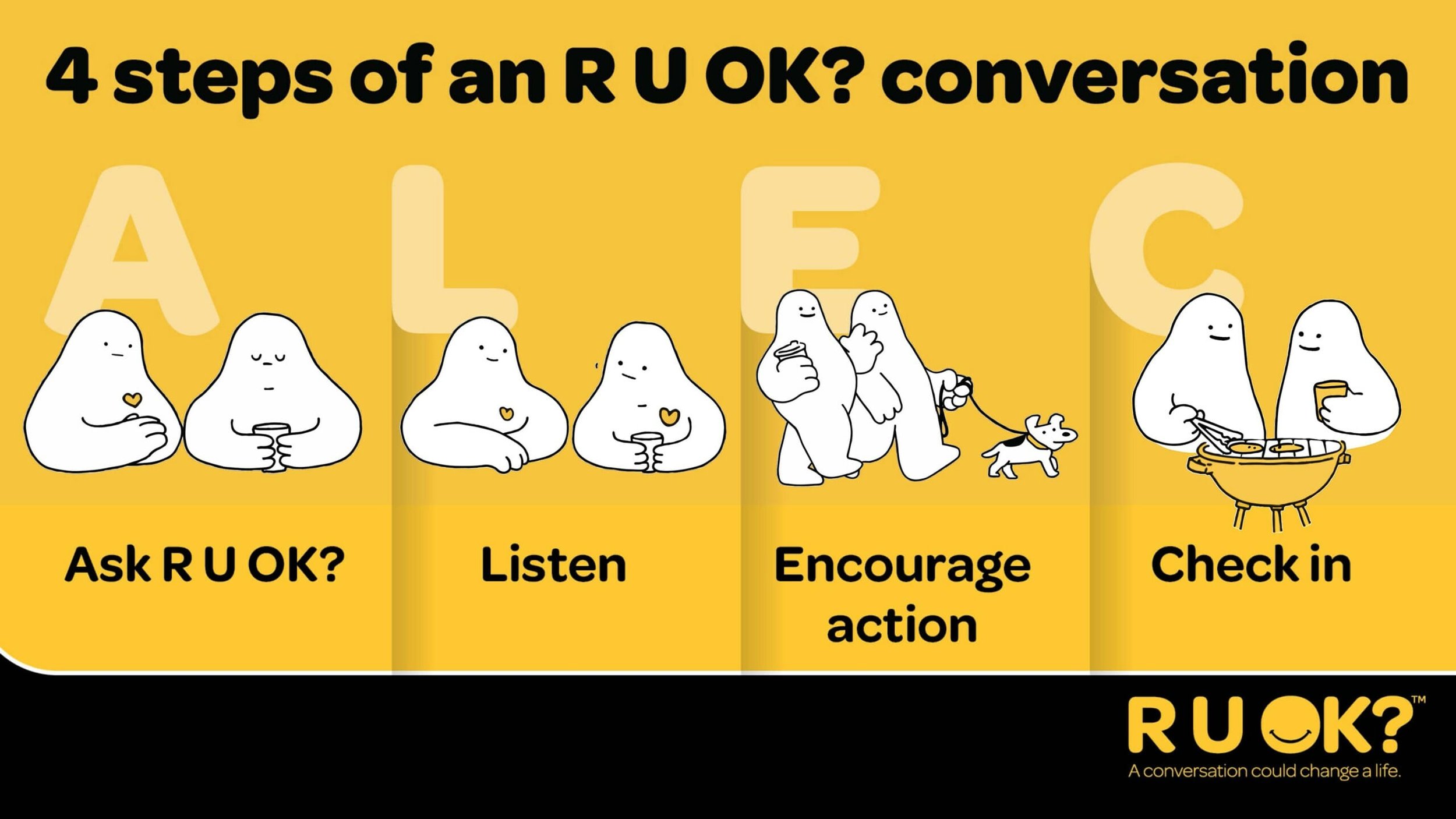
R U OK? describes this stage as “Encourage action” and recommends helping the person think about strategies or sources of support that may help them manage what they are experiencing.
6. What if they don't want to talk?
Not everyone will be ready to open up when you ask.
Try not to pressure them or take their response personally.
You could simply say:
“That's okay. You don't have to talk about it now, but I'm here if you ever want to.”
You might also ask whether there is somebody else they would prefer to speak with.
Even if they don't want to talk at that moment, your conversation can still let them know that someone has noticed, cares about them and is available when they are ready.
7. Remember to check in again
A meaningful conversation doesn't necessarily end when you say goodbye.
Checking in again a few days later can reinforce that your concern was genuine.
It could be as simple as:
“I've been thinking about you. How have you been going since we spoke?”
R U OK?'s fourth conversation step is “Check in” by staying connected and following up after your initial conversation.
You don't need another lengthy conversation every time. A message, phone call or invitation for a coffee can remind someone that they aren't facing things alone.
8. Know when to encourage professional support
Friends, family members and colleagues can be an important source of connection and support, but some situations require professional help.
If someone has been struggling with their mental health, you can gently encourage them to speak with a qualified health professional.
A GP can be a useful starting point. They can listen to what has been happening, assess the person's needs and discuss appropriate treatment or support options.
You could say:
“It sounds like you've been going through a lot. Would you feel comfortable talking to your GP about how you've been feeling?”
You could also offer practical support, such as helping them find an appropriate service or simply encouraging them to make an appointment.
You don't need to have the perfect words
One of the biggest barriers to checking in with someone can be the fear of saying the wrong thing.
But a meaningful conversation isn't about having a perfect script.
It's about noticing when someone might be struggling, asking with genuine care, listening without judgement, helping them consider what support they need and remembering to check in again.
R U OK? summarises these steps as:
Ask R U OK? → Listen → Encourage action → Check in.
This R U OK? Day, and throughout the year, consider taking the time to check in with someone in your life.
A simple conversation can be an important place to start.
Where to get help
If you or someone you know is struggling, support is available.
Lifeline: 13 11 14 – 24/7 crisis support
Kids Helpline: 1800 55 1800
Beyond Blue: 1300 22 4636
If someone's life is in immediate danger, call 000.
Sources: R U OK? – How to Ask R U OK?, When Life Happens and R U OK? Day 2026.
